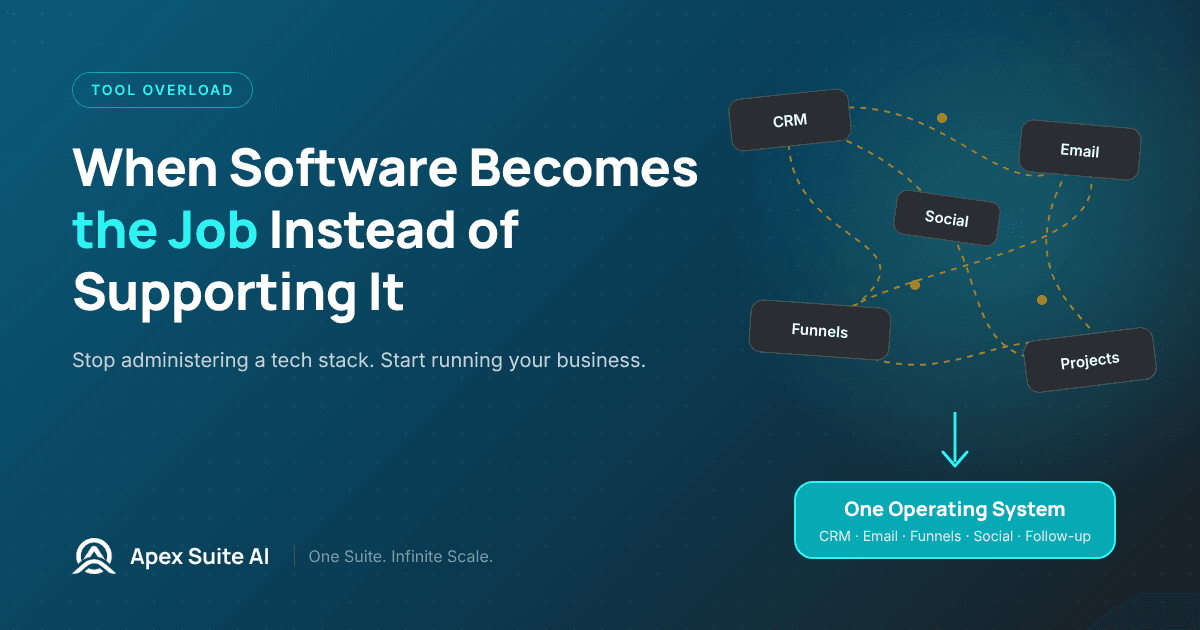
Your team uses Slack for messaging, Google Drive for files, Zoom for calls, a CRM for contacts, and a project board for tasks. Everyone has access to everything. And somehow, nobody knows what anyone else did yesterday.
The problem isn’t communication. It’s architecture.
When a team operates across five platforms, coordination becomes a manual process. Someone has to summarize the call and post it in Slack. Someone has to move the task from “in progress” to “done” on the board. Someone has to update the CRM after a conversation. Someone has to share the file link in the right channel so the right person sees it.
Every one of those steps is a handoff. And handoffs are where things disappear. The call summary that never got posted. The CRM record that’s two conversations behind. The file that exists but nobody can find because it was shared in a thread that scrolled out of view.
The team isn’t underperforming. The architecture is creating gaps between what they do and what the system remembers.
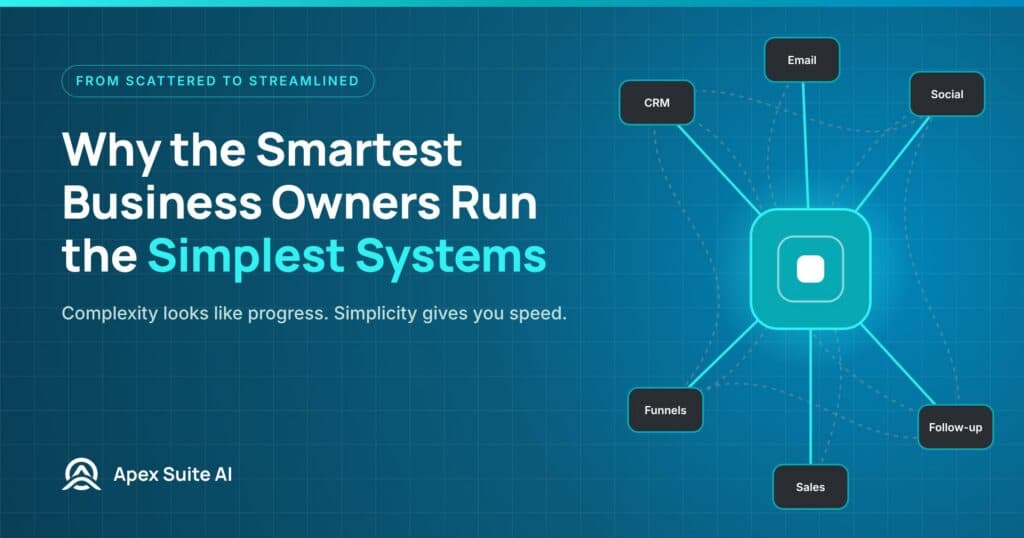
When a team runs on a single system, the handoffs vanish. A message sent inside the platform is already logged. Content shared is already accessible. Activity is already tracked. Nobody has to duplicate their work across apps because the work lives where the team lives.
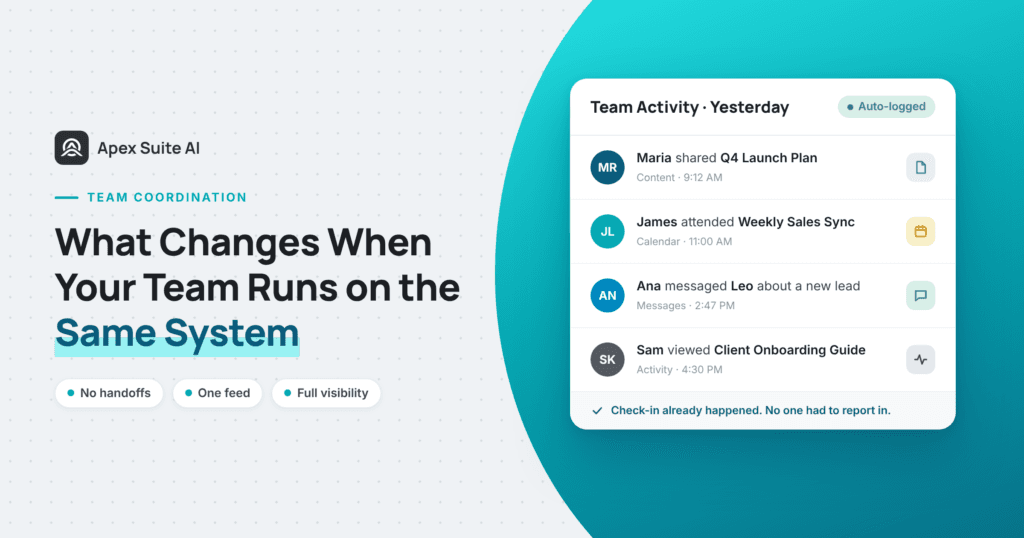
That’s not just efficiency. It’s visibility. A team leader who wants to know what happened yesterday doesn’t have to poll four platforms and piece together a timeline. They open one feed. They see who shared what, who attended which event, who messaged whom, and what content was accessed. Not because everyone reported in – because the system recorded it as part of its normal operation.
The shift is subtle but significant: team coordination stops being an additional activity and starts being a byproduct of doing the work. Nobody has to “check in.” The check-in already happened.
When messaging, content, calendars, and activity tracking share the same architecture – the way they do inside Apex Suite AI with ASAI Teams – team coordination becomes a default, not a discipline. The team doesn’t run better because they’re trying harder. They run better because the system was designed to keep them connected without adding to their workload.
That’s what changes when everyone’s on the same system. You stop managing the team’s coordination and start leading their direction.