There’s a pattern among the business owners who seem to have it figured out. Their operations aren’t more complex than everyone else’s. They’re simpler.
Not because their businesses are smaller. Because they stopped confusing complexity with sophistication.
Complexity feels like progress. More apps, more automations, more integrations, more dashboards – it looks like a business that’s scaling. But complexity without clarity is just overhead in disguise.
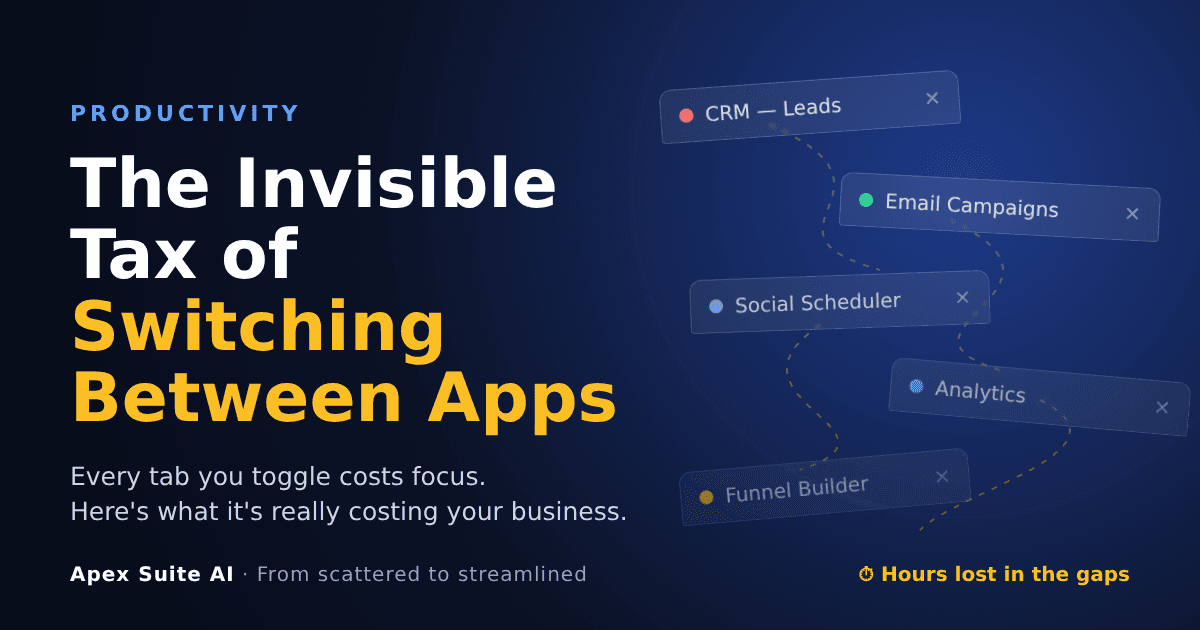
Every additional system introduces maintenance. Every integration introduces a failure point. Every dashboard introduces a new place to check. And at some point, the business owner who thought they were building a machine realizes they’ve built a maze.
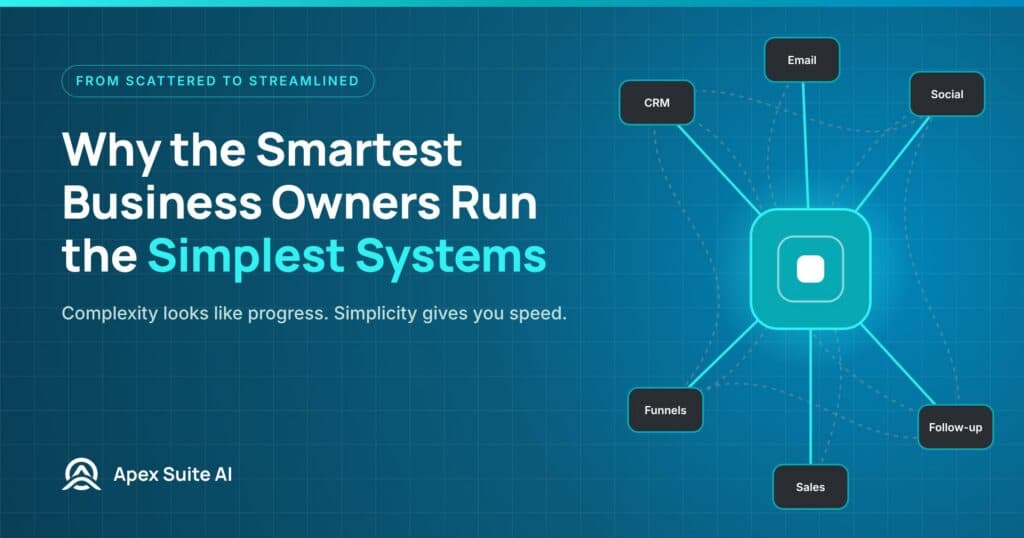
The smartest operators figure this out early. They don’t want more features. They want fewer systems. They want every feature to live inside the same architecture so they can run the business from one place instead of managing the connections between six.
Simplicity isn’t the same as basic. A simple system can be extraordinarily capable – it just doesn’t scatter that capability across disconnected platforms. The CRM, the follow-up, the email, the content scheduling, the team coordination – when all of those live under one roof, the operator doesn’t have to think about the system. They think about the business.
That’s the trade-off most people miss. Complexity gives you options. Simplicity gives you speed. And in a small business, speed wins almost every time – speed of response, speed of decision, speed of execution.
The business owner who checks one dashboard instead of five makes faster decisions. The one who trains a new team member on one platform instead of four gets them productive sooner. The one who troubleshoots inside a single system instead of across three vendors fixes problems before they cost revenue.
Sophistication isn’t about how many systems you run. It’s about how little you have to think about the systems you run. The simplest setup that covers everything is always better than the most impressive setup that requires you to manage it.